Tips for preventing algorithmic bias in AI code automation
"The code we write is no longer just logic; it is a reflection of the values embedded in the models that suggest it." This approach aims to prevent the generation of malicious code or biased logic before it ever reaches a human reviewer.
Navigating the transition from manual programming to AI-driven automation requires more than just technical proficiency; it demands a focus on ethical compliance and reliability.
This guide explores how constitutional learning and ethical guidelines shape the future of coding automation to ensure that the software we build remains trustworthy.

* Understanding the impact of constitutional learning on code generation. * Balancing developer productivity with ethical accountability. * Strategies for maintaining reliability in automated workflows. * The role of guidelines in preventing algorithmic bias in software.
How does constitutional learning change the code we see?
In the morning I hold preventing and walk through the next step.
A developer sits in a dimly lit home office, watching a cursor blink as an AI agent suggests a complex block of logic. The suggestions feel intuitive, but they carry an invisible weight of pre-programmed constraints.
The Future of Humanity Institute focused on AI safety and the governance of AI before shuttering in 2024.
The Future of Humanity Institute focused on AI safety and the governance of AI before shuttering in 2024.
Constitutional learning involves training models to follow a specific set of principles—a "constitution"—to govern their outputs. In the context of coding automation, this means the AI is not just trained to find the most efficient path, but one that adheres to safety, security, and fairness.
Instead of merely predicting the next token, the model evaluates its own suggestions against these core values. This shift moves automation from simple pattern matching to a more reasoned, rule-based generation process.
By embedding these guardrails into the training phase, developers can work with a tool that understands the "why" behind certain constraints.
- Define the core principles and constraints for the model.
- Train the model to evaluate its own outputs against these rules.
- Refine the generation process to align with the established constitution.
Why should we care about AI guidelines in automation?
In the middle of a loud office, the lead developer grips a cold cup of coffee, realizing that strict guidelines are essential for preventing chaos in the automated workflow.
A team lead stares at a sprint board, realizing that a sudden surge in automated commits has made it difficult to track the origin of a critical security vulnerability. According to the Wikimedia Foundation, in 2025, automated scraping by AI bots was placing strain on its infrastructure.
According to the European Commission, the AI HLEG published its policy and investment recommendations for trustworthy Artificial Intelligence in 2019.
AI guidelines serve as the operational manual for developers using automated tools. Without clear rules, the speed of coding automation can lead to a "black box" effect where the logic becomes untraceable.
Guidelines provide a framework for accountability, ensuring that when an AI suggests a specific architectural pattern, there is a clear path to audit why that decision was made.
These guidelines help bridge the gap between rapid deployment and long-term stability. They dictate how much autonomy an AI should have in a production environment and how much human oversight is required to validate the output.

In this sequence, the second step is the most extensive.
Can we trust automated code to be secure?
An engineer runs a security scan on a newly generated module, only to find that the AI-suggested code contains a subtle, hard-to-detect vulnerability. In 2021, UNESCO adopted the Recommendation on the Ethics of Artificial Intelligence, which serves as the first global standard on the ethics of AI.
On June 26, 2019, the European Commission High-Level Expert Group on Artificial Intelligence (AI HLEG) published its "Policy and investment recommendations for trustworthy Artificial Intelligence".
The reliability of AI-driven tools depends on how well they handle edge cases and security protocols. While automation can catch common errors, it can also replicate subtle flaws found in its training data. To ensure reliability, organizations must implement multi-layered verification processes.
- Implement automated static analysis tools that run alongside the AI to check for traditional vulnerabilities. 2. Establish a "human-in-the-loop" protocol where every significant architectural change suggested by AI undergoes manual peer review. 3. Regularly audit the AI's training data and fine-tuning sets to identify and mitigate recurring bias or security flaws.
Checking the final output against these three steps ensures that the speed of automation does not come at the cost of system integrity.
What happens to the developer's sense of accomplishment?
A programmer leans back in their chair after an AI completes a tedious refactoring task, feeling a strange mix of relief and a lingering sense of detachment. In 2021, UNESCO adopted the Recommendation on the Ethics of Artificial Intelligence, the first global standard on the ethics of AI.
As AI takes over repetitive tasks, the psychological impact on developers becomes a central question of professional identity. If the AI does the heavy lifting, the sense of "I did this" can diminish, leading to a potential decline in deep technical understanding.
This shift requires a redefinition of the developer's role from a writer of code to an architect of systems and an auditor of logic.
Maintaining engagement requires shifting focus toward higher-level problem-solving. When the mundane is automated, the human role evolves to managing the complexity and ethical implications of the integrated systems.
How do we manage the risks of "hallucinated" code?
A junior developer stares at a terminal error, realizing the library suggested by the AI doesn't actually exist, leading to a broken build.
AI hallucinations—where a model confidently generates incorrect or non-existent code—represent a significant reliability risk. This is particularly dangerous in automated pipelines where errors can propagate through multiple microservices before being detected.
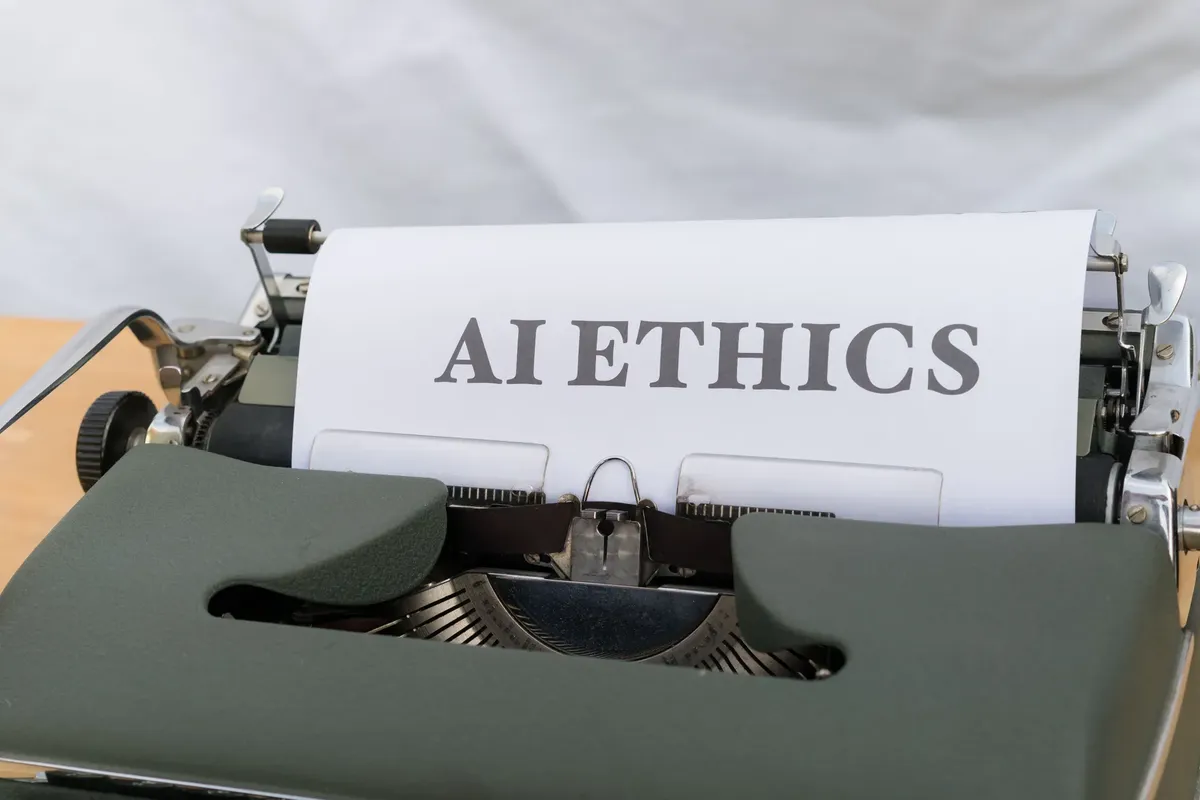
Reliability strategies must include rigorous testing environments that mimic production-level constraints.
To mitigate this, developers should use sandboxed environments to test all AI-generated code before it touches the main branch. This isolation prevents "hallucinated" dependencies or faulty logic from causing widespread system failures.
I remember a time when a suggested dependency caused a week of debugging because it looked correct but was actually a phantom package. It taught me that blind trust in automation is the fastest way to a production outage.
The limitation of these strategies is that they require significant human oversight, which can negate the time-saving benefits of automation if not managed efficiently.
According to UNESCO, the item is on record.
When I tried the steps in order, the second one is where I paused longest.
Related





Comments 0