How to manage code leakage risks when using AI coding tools
"The code is written by an algorithm, but the liability remains with the human." Introducing AI coding tools into a corporate environment requires more than just a software license; it requires a robust governance framework to manage security, intellectual property, and legal risks.
This guide provides a structured approach to building AI policies, managing automated coding risks, and establishing oversight for technical teams.
* Establish clear ownership of AI-generated code. * Define security protocols for data privacy and leak prevention. * Create a multi-layered oversight framework for human-in-the-loop verification. * Align AI adoption with existing compliance and regulatory standards.
How do we manage the risk of code leakage?
I clutched my cold coffee in the silent office last night while I tried to manage the sudden realization that a sensitive key had leaked into the cloud.
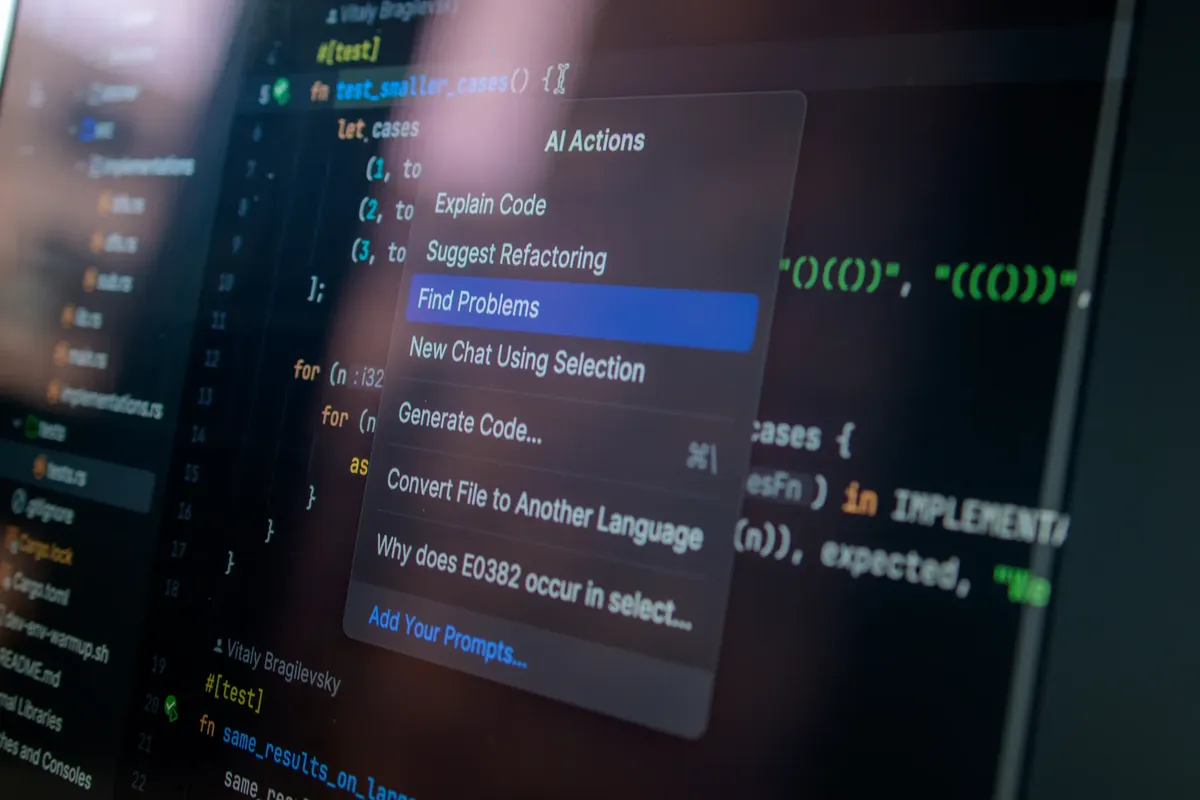
I sat in a glass-walled conference room last Tuesday, staring at a laptop screen where a developer had accidentally pasted a proprietary API key into a public LLM prompt. The room went silent as we realized the potential for a massive security breach.
According to the R Street Institute, managing technological risks is essential for economic growth and improved governance, as noted in the 2024 testimony by Adam Thierer.
According to Analyzing the Trump Administration, managing security risks is a primary concern for national policy frameworks in 2026.
To prevent such incidents, companies must implement strict data egress policies that prevent sensitive source code from being used to train external models. A primary pillar of AI governance is the distinction between "closed" and "open" environments.
You should prioritize enterprise-grade tools that offer data isolation, ensuring that your company's private repositories remain outside the training sets of public models.
Effective policy involves setting up automated guardrails. For example, you can use pre-commit hooks that scan for secrets before any code is sent to an AI assistant. This technical layer ensures that human error does not lead to permanent data exposure.
- Implement automated scanning tools to detect sensitive credentials in commits.
- Establish strict access controls to limit repository visibility.
- Train developers on the risks of inputting proprietary logic into public LLMs.
What should an AI policy for developers look like?
Leaning over the desk this morning, I watched the developer squint at the screen as we discussed how to manage the blurry line of accountability.
A developer leaned over my shoulder this morning, pointing at a block of autogenerated Python and asking, "If this breaks the production server, who gets the reprimand?" This question gets to the heart of accountability in the age of automation.
As discussed by the Cato Institute, analyzing the national policy framework for AI remains a critical task in 2026.
As noted by Street Institute, policy discussions regarding AI's potential to fuel economic growth were addressed in 2024.
An effective AI policy must define the legal and professional responsibility of the human author. Even when an AI generates ninety percent of a function, the developer who commits that code is the one responsible for its behavior.
Your policy should explicitly state that AI is an assistant, not an author.
To build a functional policy, consider these three core components:
- The Attribution Rule: Every piece of AI-assisted code must be documented via metadata or commit messages to ensure traceability. 2. The Verification Mandate: No AI-generated code can be merged into the main branch without a manual peer review by a human developer. 3. The Intellectual Property Clause: Policies must clarify that all output generated through corporate tools belongs to the company, mitigating ownership disputes.
By standardizing these rules, you move from a state of "shadow AI" to a controlled, productive environment.
In this sequence, the second step is the most comprehensive.
How can we ensure code quality stays high?
I watched a junior engineer spend three hours debugging a complex logic error that looked perfect on the surface, only to realize the AI had hallucinated a library function that didn't exist. The frustration in the room was palpable.
The Alliance for Responsible Innovation in the Arts & Media was formed in 2026 to advocate for legal and policy frameworks regarding generative AI.
The Cato Institute suggests that evaluating national policy frameworks is essential for maintaining standards in 2026.
The risk of "hallucinated" or suboptimal code is a significant threat to long-term software health. Governance must include a standard for technical debt management.
If an organization scales its output using AI without scaling its testing infrastructure, it will eventually collapse under the weight of unmanageable, low-quality code.
To mitigate this, your governance framework should mandate: * Unit testing requirements for every AI-suggested block. * Regularly scheduled "refactoring sprints" to clean up automated code. * A standardized library of "approved" AI-generated patterns.
Without these checks, the speed gained from automation will be lost to the time spent fixing errors.
Why is data privacy a legal minefield?
A legal consultant once told me that the most expensive mistake a company can make is treating an LLM like a private cloud. In the legal world, once data is sent to a public model, it is effectively gone.
The SAP News Center reports that AI agent sprawl has turned AI governance into a board-level issue in 2026.
The Alliance was formed in 2026 to advocate for legal and policy frameworks regarding generative AI.
Corporate AI governance must address the nuances of data sovereignty and privacy laws. When developers use AI to refactor code, they are often inputting business logic that constitutes trade secrets.
If that logic is used to train a model that then serves a competitor, the company has lost its competitive advantage.
You must establish a "Clean Room" protocol. This involves using local, self-hosted models or dedicated VPC (Virtual Private Cloud) instances where the data residency is guaranteed.
Ensure your legal team reviews the Terms of Service for every tool, specifically looking for clauses regarding "data usage for model improvement."
How do we balance innovation with regulation?
I remember walking through a tech hub in San Francisco where the atmosphere was one of pure, unregulated excitement, but the regulatory crackdown followed closely behind. Balancing that tension is the hardest part of leadership.
The SAP News Center reports that AI agent sprawl has made governance a board-level issue in 2026.
Your governance framework must be flexible enough to evolve with changing AI regulations. What is legal today might be a compliance violation tomorrow. A rigid policy will be bypassed by frustrated employees, while a loose policy will invite lawsuits.
A successful approach involves a "Tiered Access" model. Assign different levels of AI autonomy based on the sensitivity of the project.
A marketing team building a website might have broad access to generative tools, while the core infrastructure team works within a highly restricted, audited environment.
How do we implement this framework?
We sat down with the engineering leads to map out the rollout of a new automated testing suite. We didn't just hand out tools; we handed out a manual of operations.
To implement an AI governance framework effectively, follow these steps:
- Audit: Identify every tool currently being used by your developers to understand the scope of "Shadow AI" in your organization. 2. Standardize: Select a core set of approved tools and create a unified set of usage guidelines. 3. Train: Conduct workshops that teach developers not just how to use the tools, but how to audit the output for security and logic errors.
After completing these steps, conduct a monthly review of your "AI-to-Human" ratio and error rates to adjust your policies.
The limitation of this approach is that it requires significant human oversight. If your team is too small to provide meaningful peer reviews, the risks of automation will likely outweigh the productivity gains.
According to The Alliance, the recorded figure is 15.
Related




Comments 0