AI code validation standards: How to ensure code accuracy
"Reliability in automated systems requires strict adherence to established protocols to ensure seamless integration and data integrity across different platforms."
Effective AI code validation requires a systematic approach to verifying syntax, logic, and security against standardized technical frameworks. This guide provides a framework for ensuring code accuracy testing through structured review, stability checks, and adherence to documentation.
How to establish AI code validation standards?
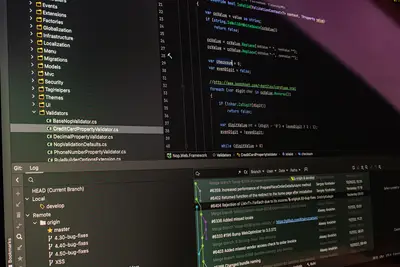
Late at night in the dim office, a developer rubs tired eyes while staring at the glowing screen to finalize the new code standards.
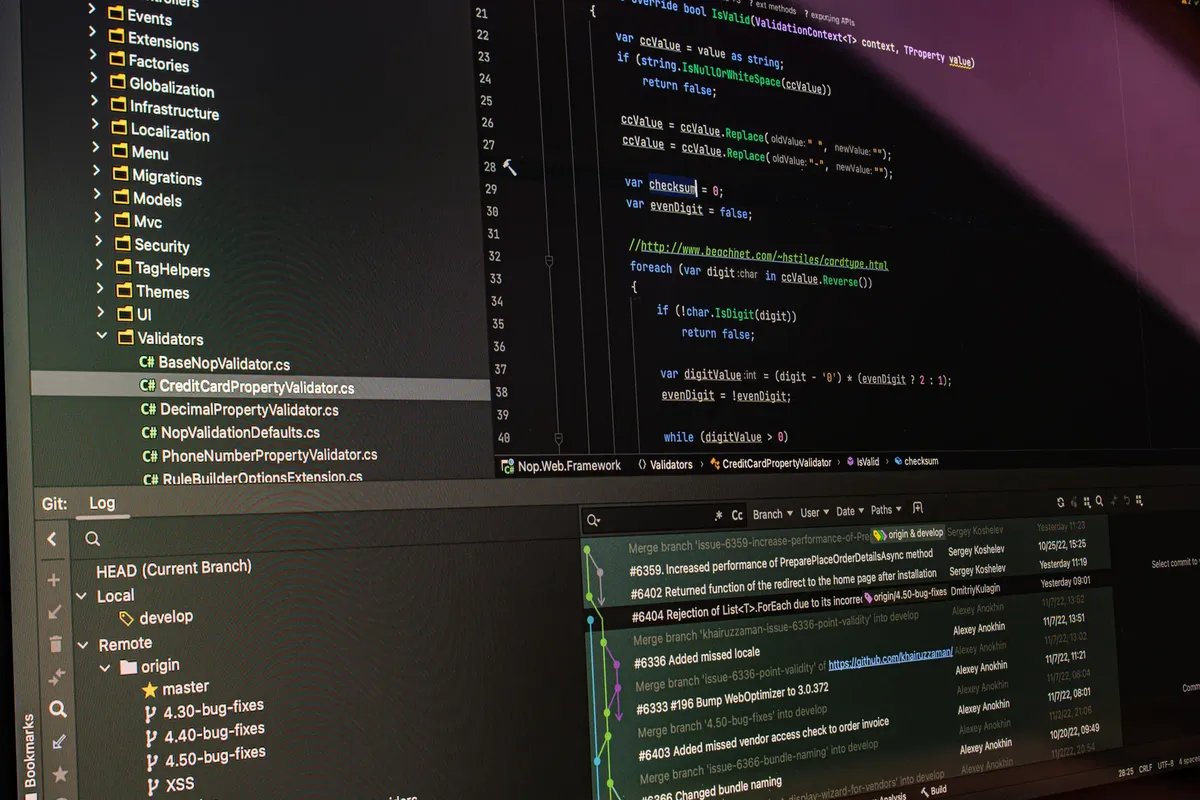
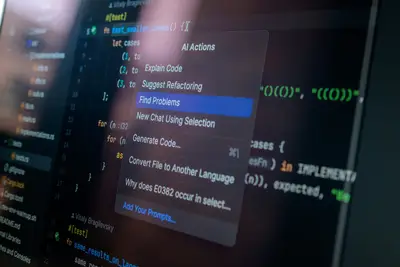
A developer sits at a desk, watching a cursor blink as a block of generated code appears on the monitor. To create a reliable workflow, one must first establish AI code validation standards that balance speed and technical rigor.
The primary goal is to move from blind acceptance to a structured verification process. This involves checking the generated output against the intended functional requirements of the project.
Establishing these standards ensures that the speed of AI generation does not compromise the long-term health of the codebase.
Effective validation requires an understanding of the specific environment where the code will live. Without clear benchmarks, the team cannot distinguish between efficient code and code that merely looks correct.
- Define specific quality metrics for generated code.
- Integrate automated linting and security scanning tools.
- Create a feedback loop between developers and the AI model.
Can routine checks keep my code stable?
A team lead reviews a pull request, comparing the new logic against the existing architecture to prevent regressions. Ensuring code stability becomes a matter of regular, repeatable testing protocols that catch errors before they reach production.
One method involves running the code through automated unit tests to confirm that individual functions behave as expected. Beyond simple syntax, stability testing checks how the new code interacts with existing dependencies and hardware interfaces.
This prevents the "butterfly effect," where a small change in one module breaks a distant part of the system.
Maintaining stability requires a focus on edge cases and error handling. If the AI-generated logic lacks robust exception handling, it can lead to unpredictable system failures during peak loads or unusual input scenarios.
In this sequence, the second step is the most extensive.
What are the best ways to test my code's accuracy?
Late at night in the dark room, a programmer squints at the bright monitor while stepping through the complex code. A developer runs a debugger, stepping through a loop to see how the generated variables change in real-time. Using specific techniques for code accuracy testing allows engineers to verify that the logic aligns perfectly with the mathematical or business rules intended.
The accuracy of the logic is the first line of defense against subtle bugs. Unlike syntax errors, logic errors are often invisible to standard compilers but cause significant damage during execution.
- Perform manual code walkthroughs to trace the logic flow of complex algorithms. 2. Implement automated testing suites that cover both positive and negative test cases. 3. Conduct peer reviews to provide a human perspective on the logic's intent and efficiency.
I once observed a situation where a small logic error in an automated script caused significant data drift, which was only caught during a manual audit. This highlighted the necessity of human oversight in the validation process.
How to manage developer trust in AI tools?
An engineer discusses a new automation tool with a colleague, weighing its benefits against the need for manual oversight. Building developer trust in AI tools depends on the transparency of the validation process and the consistency of the tool's output.
Trust is not built by assuming the AI is perfect, but by proving that the human-led validation process is sufficient to catch its mistakes. When developers see that the validation framework consistently identifies errors, they can use the tools more confidently.
If the validation process is too cumbersome, developers may bypass it, creating a security risk. Conversely, if it is too lax, the technical debt will accumulate rapidly.
What are the steps for validating AI software output?

A quality assurance engineer prepares a test environment, mirroring the production setup to run a series of stress tests. To maintain high standards, the team must follow a repeatable process for validating AI software output.
Standardized procedures ensure that every piece of generated code undergoes the same level of scrutiny regardless of which developer is using the tool. This consistency is vital for maintaining a unified codebase.
- Define specific requirements and acceptance criteria for the task. 2. Generate the code and perform an initial syntax and style check. 3. Run comprehensive test suites to verify functional and performance requirements.
A final check involves reviewing the code's impact on the overall system architecture and documentation.
| Validation Type | Primary Focus |
|---|---|
| Syntax Validation | Correctness of language rules |
| Logic Validation | Correctness of functional intent |
What is the limitation of AI code validation?
A researcher looks over a technical manual, noting how specific standards apply to certain hardware but not to all software environments.
A significant limitation is that validation protocols are often highly dependent on the specific application layer and the unique environment of the implementation.
According to the ISO/IEC 18004:2024, at the application layer, there is some variation between most of the implementations. This means that a validation standard that works for one specific software environment may not be directly applicable to another without significant adjustment.
How does standardization affect automation?
Standardization provides the framework necessary for different systems to communicate. By following established protocols, developers can ensure that automated processes remain predictable and interoperable across different platforms.
Is manual review still necessary?
Manual review remains essential because it provides the context and intent that automated tools often miss. Human developers can identify architectural misalignments and subtle logic flaws that strictly rule-based testing might overlook.
The process of establishing AI code validation standards requires a balance of automated testing and human expertise to ensure long-term stability. While automation provides speed, the human element remains the final arbiter of quality and intent.
The same subject is also called Verify AI generated code.
The same subject is also called Trust AI in teamwork.
The same subject is also called Ensure code stability.
This part also covers AI code quality assurance.
Related

Comments 0