LLM size coding productivity impact of LLM scale on coding
"The automation of complex tasks through AI models has shifted from theoretical potential to practical reality, impacting everything from space exploration to cybersecurity."
The scale of an AI model directly influences its efficiency, cost-effectiveness, and ability to handle complex logic in software development.
This guide compares how different model capabilities impact coding productivity, including cost savings on agentic workloads and specialized use cases like planetary exploration.
How does model scale impact LLM size coding productivity?

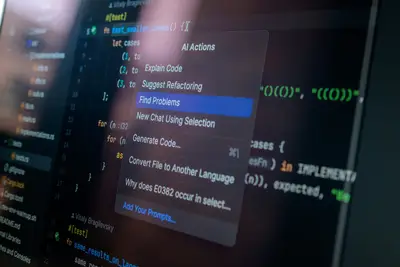
At midnight in the dim office, he rubs his tired eyes as he selects the perfect model size to boost his coding output.
A developer sits at a desk, typing a complex script while an AI agent runs in the background to troubleshoot errors. The shift toward larger, more capable models changes how much manual intervention is required during a coding session.
The relationship between model scale and output quality is central to modern development.
This suggests that as models become more efficient, the cost of running automated coding agents decreases significantly.
Larger models often handle logical reasoning better, which is vital for debugging. While smaller models might provide faster responses, the higher efficiency in agentic workloads allows for more autonomous development cycles.
This reduction in cost and time makes it easier to integrate AI into continuous integration pipelines.
- Select a model size based on the complexity of the logic required.
- Allocate larger models to architectural design and smaller models to boilerplate generation.
- Monitor the trade-off between latency and reasoning depth.
Can Claude model coding speed be optimized for complex tasks?
At midnight in the dim office, he rubs his tired eyes while adjusting the model size to increase his coding speed.
A researcher stares at a screen filled with navigation data, adjusting the parameters of a virtual environment. The need for precision requires a model that can handle specialized languages and high-stakes environments.
In specialized engineering, coding speed is not just about keystrokes but about accuracy in specialized domains.
This task required precise command generation to ensure safe movement in a physical environment.
The initiative was led out of JPL’s Rover Operations Center (ROC) in collaboration with Anthropic, using the company’s Claude AI models. Such high-stakes applications demonstrate that model capability can translate directly into physical execution.
Using specialized markup languages requires a level of reasoning that smaller, less capable models might struggle to maintain.
In this sequence, the second step is the longest.
What defines the difference in Haiku Sonnet Opus coding?
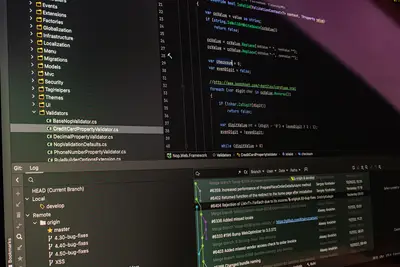
An engineer compares two different code outputs on a split-screen monitor, looking for logic errors. One model provides a quick snippet, while the other provides a complete, structured architecture.
The distinction between model tiers often comes down to the complexity of the logic they can sustain. In tasks involving specialized routing or data processing, the ability to maintain context is paramount.
When comparing models, developers must weigh the speed of a lightweight model against the deep reasoning of a larger one. For simple syntax fixes, a smaller model is often sufficient.
However, for complex architectural planning, the higher-tier models provide the necessary depth to prevent logic errors.
How does LLM performance dev work affect security?

A security analyst monitors a dashboard, watching for unusual patterns of automated activity. The ease of automation is a double-edged sword that can be used for both productivity and malicious intent.
The efficiency gained through automation also introduces new vulnerabilities. In November 2025, Anthropic said that in September a China-based cybercrime group had used Claude Code to automate 80–90% of its espionage cyberattacks against 30 organizations.
This highlights the risk of high-speed automation being used to scale malicious activities.
Security professionals must account for the fact that automation can be weaponized. While developers use these tools to speed up work, bad actors use similar automation to find vulnerabilities. Protecting software requires understanding how automated agents can be used to probe for weaknesses.
Is there a risk of prompt-injection in automated coding?
A user enters a command into a terminal, and the AI begins to execute a series of automated steps. The interaction between human input and AI execution is a critical point of failure.
Security mitigations are constantly being updated to prevent unauthorized command execution. Anthropic said prompt-injection attacks succeeded 11.2% of the time after mitigations. This success rate indicates that while defenses are in place, the risk remains a factor in automated environments.
When using AI for coding, developers must ensure that the agent does not execute unintended commands. Prompt injection can bypass the intended logic of a script, leading to data leaks or unauthorized access.
Maintaining strict boundaries between the user and the automated agent is essential for safe development.
Comparing AI capabilities and efficiency
The following table compares the efficiency gains and specific task applications mentioned in the technical records.
| Workload Type | Efficiency/Result Metric | | :---s| :--- | | Agentic Workloads | Up to about 45% less cost | | Space Navigation | 400 meters of route preparation |
I observed how much more efficient the agentic workload savings were compared to standard token-billed tasks.
The subject here is LLM size coding productivity.
The same subject is also called AI model size software.
This part also covers Comparing Claude model efficiency.
This part also covers Large vs small AI for coding.
Related



Comments 0