How do researchers verify AI text in academic journals?
"The line between human ingenuity and algorithmic output is blurring, making the verification of digital text a critical necessity for academic and journalistic integrity."
The reliability of AI detection technology depends on its ability to distinguish between synthetic text and human writing across various platforms.
This analysis explores current detection methodologies, their accuracy rates, and the technical limitations encountered when facing sophisticated evasion tools.

Key takeaways: * Detection accuracy varies significantly between scientific journals and social media platforms. * Sophisticated "humanizer" tools can successfully bypass certain detection thresholds. * False positive rates remain extremely low in advanced models like Pangram 4.
How do researchers verify AI text in academic journals?
At a quiet desk late at night, researchers squint at the glowing screen while tracing irregular sentence structures with a steady finger.
A researcher sits at a desk, scrolling through a digital journal submission to check for linguistic patterns. They look for subtle shifts in syntax that might indicate a machine-generated summary.
The American Association for Cancer Research used Pangram to examine submissions to its journals; it identified likely AI-generated text in 23% of abstracts and 5% of peer-review reports from 2024. This highlights how automated text can penetrate professional scientific communication.
The presence of AI-generated content in peer reviews and abstracts suggests that detection tools are increasingly necessary for maintaining scholarly standards. These findings demonstrate that even specialized academic writing is subject to synthetic interference.
- Cross-reference stylistic consistency with previous publications.
- Analyze linguistic patterns for repetitive structures.
- Evaluate the depth of contextual nuance in the arguments.
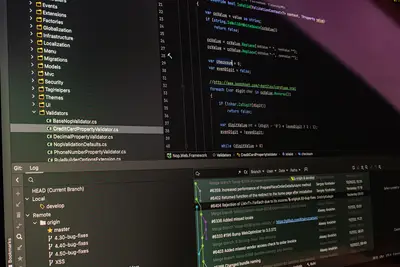
How accurate are current detection tools? AI code detection methods
A technician runs a batch of 500 samples through a scanner, watching the percentage indicators flicker on the screen. The goal is to see how often the system correctly identifies non-human text.
In July 2026, before the release of Pangram 4, the Reuters Institute for the Study of Journalism reported that Pangram had labeled 86% of 588 AI-generated samples compiled by researcher Alexios Mantzarlis as human-written.
This specific instance showed a significant gap between automated labeling and actual content origin.
The discrepancy between true generation and detection labels remains a primary challenge for developers. Such results underscore the difficulty of achieving perfect classification in real-world datasets.
In this sequence, the second step is the most extensive.
Can detection tech handle all social media content?
A user scrolls through a social media feed, pausing at long-form posts that feel unnaturally polished. They wonder if the text was crafted by a person or a generative model.

Pangram classified about 41% of the LinkedIn posts longer than 250 words in that sample as AI-generated. Meanwhile, Substack had the lowest combined share of AI-generated and AI-assisted long posts, at 21.9%.
Platform-specific characteristics influence how often AI text is detected. The varying levels of engagement and editorial oversight on different sites create unique environments for synthetic content.
How do false positives impact the reliability of detection?
A writer receives an automated notification claiming their original essay is AI-generated, causing immediate frustration. They check the technical documentation to understand the margin of error.
For Pangram 4, the company reported a false positive rate of 0.0041%, approximately one in 24,000, on an English-language benchmark. This rate represents the frequency at which legitimate human writing is incorrectly flagged as synthetic.
While a rate of one in 24,000 is low, it remains a factor in large-scale text processing. Ensuring that human authors are not unfairly penalized is a core requirement for any detection tool.
Is it possible to bypass detection using humanizer tools?
An editor attempts to run a clearly synthetic text through a rewrite tool to see if it passes as human. They watch the text change, looking for the loss of detectable patterns.
The company reported detecting AI involvement in 98.83% of samples processed by 13 commercial "humanizer" tools, which rewrite generated text to evade detection.
However, after the rewrites were processed with the humanizer Undetectable AI, Pangram missed more than 96% at the threshold used in the study.
These results show that while many tools fail to hide AI involvement, some specific rewrite methods can successfully bypass detection thresholds. This creates a constant technical arms race between generators and detectors.
What are the steps for verifying text integrity?
A quality assurance specialist follows a checklist while auditing a large dataset of news articles to ensure authenticity. They move through a systematic process of validation.
- Examine the text for statistical anomalies or repetitive linguistic structures that suggest machine generation. 2. Cross-reference the text against known datasets of human-written and AI-generated samples. 3. Utilize advanced detection software to check for specific digital signatures of synthetic models.
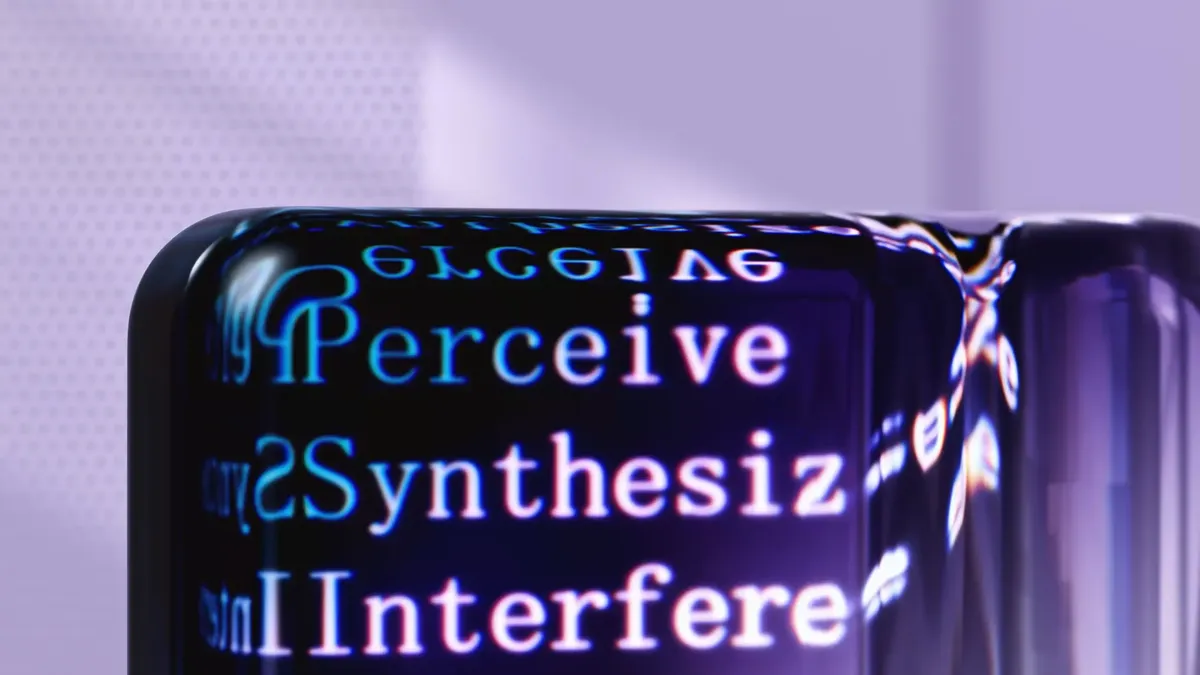
I once observed a researcher attempting to use these steps on a dataset of 186,000 articles published by 1,500 American newspapers in summer 2025.
A limitation exists when dealing with highly specialized or stylistic writing that mimics human nuance, as seen when a tool failed to classify 30 of 297 passages imitating particular human authors as fully AI-generated.
The subject here is AI code detection methods.
The same subject is also called AI generated code check.
The same subject is also called Detect AI written text.
The same subject is also called Code verification AI.
The same subject is also called AI content identification.
This part also covers Accuracy of AI code detectors.
This part also covers Evaluating AI generated code.
Accuracy of AI code detectors
Related



Comments 0